Spend with more confidence
Learn how to test a battery before automatically paying for a replacement. A clear diagnosis can help you separate a recoverable performance issue from a battery that truly needs responsible recycling.
Easy Battery Fix is a practical digital manual about assessing, maintaining, and reconditioning common rechargeable batteries. It gives everyday readers an organized place to start before they replace a battery that may still deserve a careful evaluation.
Digital
Online access
60 days
Advertised guarantee
One-time
Purchase described
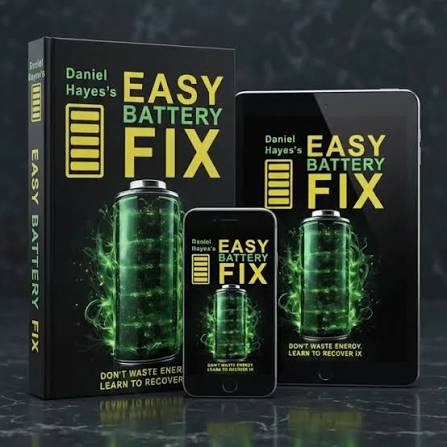
Nothing is shipped
This is a downloadable educational product, not a physical repair device.
A practical overview
Easy Battery Fix is an instructional program focused on battery reconditioning. Rather than selling another charger or replacement cell, it organizes basic battery knowledge, testing ideas, and maintenance procedures into a digital guide. The premise is straightforward: a battery that appears “dead” may be deeply discharged, out of balance, affected by sulfation, poorly connected, or genuinely worn out. Those situations do not all call for the same response.
The guide is intended to help readers slow down and identify what they are dealing with. That matters because randomly applying a charger, opening a battery, or combining advice from unrelated videos can create risk. A structured reference can make the learning process more deliberate, especially for people who have never used a multimeter or compared battery chemistries before.
The publisher presents the material as beginner-friendly and says it addresses vehicle, household, tool, mobility, marine, and solar battery applications. That breadth is useful only when paired with one essential rule: instructions are not interchangeable across chemistries. A lead-acid car battery and a lithium-ion phone battery have different construction, control systems, hazards, and end-of-life signals.
For that reason, the best way to approach Easy Battery Fix is as an educational decision aid. It may help you understand terminology, perform appropriate external checks, maintain compatible batteries, and recognize when professional service or recycling is the better option. It should not be treated as a promise that every failed battery can return to service.
Condition sets the limit. A unit with physical damage, internal shorts, severe plate loss, a failed protection circuit, swelling, leakage, overheating, or a manufacturer recall is not a sensible reconditioning project. Results also depend on correct identification, careful measurements, suitable equipment, and following the battery maker’s safety directions.
This page gives you a complete overview of what the guide claims to cover, the type of reader it may suit, and the safety questions to consider before purchasing. When you choose an order button, you will leave this page and continue to the product’s external order page. Check the current price, guarantee, delivery terms, and retailer information there before completing payment.
Why readers consider it
The value is not a magical shortcut. It is having a repeatable framework for inspecting a battery, learning the relevant vocabulary, and deciding whether maintenance, reconditioning, replacement, or recycling makes sense.
Learn how to test a battery before automatically paying for a replacement. A clear diagnosis can help you separate a recoverable performance issue from a battery that truly needs responsible recycling.
The guide introduces practical checks and measurements so you can make decisions from observations rather than guesswork. Knowing voltage, charge behavior, and visible warning signs is an important starting point.
Battery work is easier to understand when each action has a reason. The material breaks broad reconditioning ideas into approachable sequences designed for readers without a professional repair background.
Extending the useful life of a suitable battery may delay disposal and reduce demand for an immediate replacement. Batteries that cannot be recovered should always go to an approved recycling location.
Because the product is digital, you can keep the instructions available on a phone, tablet, or computer while planning a project. The publisher also says the guide may be downloaded for personal reference.
The offer describes lifetime access, which is useful when a different battery needs attention months later. The guide becomes a reference library rather than a one-time appointment or single-use service.
The learning path
Battery reconditioning is not one universal trick. A sensible process begins with identification and inspection, then moves toward chemistry-appropriate testing and only proceeds when the battery remains a safe candidate.
Important: Procedures vary by battery chemistry. Never adapt a lead-acid method to a sealed lithium battery.
Start with the label, chemistry, rated voltage, capacity, date markings, and manufacturer warnings. Confirm what equipment the battery belongs to and whether a recall or special disposal notice applies. A missing label or unknown chemistry is a reason not to improvise.
Look for swelling, cracked housings, leakage, corrosion near damaged terminals, unusual odor, heat, impact damage, and signs that a pack has been opened. Unsafe batteries should be isolated according to local guidance and taken to an approved collection point.
For suitable batteries, the guide introduces basic testing concepts such as checking voltage and observing charge behavior. Measurements should be taken with compatible, correctly rated equipment. A reading is one clue, not a guarantee of internal health or remaining capacity.
Only after identifying a viable candidate should you consider the process given for that battery type. Use ventilation and protective equipment where required, respect polarity, avoid sparks, and stay within manufacturer charging limits. Never bypass a protection system.
A battery that accepts charge still needs evaluation. Watch for self-discharge, abnormal heat, unstable voltage, poor runtime, or repeated failure. If performance remains unreliable, retire it. Dependable operation matters more than squeezing out one additional cycle.
Inside the package
The reference offer describes a core digital manual plus supporting resources. Exact filenames and availability should always be confirmed on the external checkout page before purchase.
The central step-by-step manual introduces battery types, diagnosis concepts, maintenance ideas, and reconditioning procedures in a sequence designed for home readers.
A supporting guide focused on habits that may reduce avoidable wear, improve storage practices, and help compatible batteries deliver more useful cycles.
Additional material presented around extending battery life, with attention to charging routines, maintenance, and recognizing behavior that shortens service life.
A separate resource described for familiar rechargeable household formats, helping readers distinguish small cells from larger vehicle and storage batteries.
The publisher advertises continuing access, future updates, support, and a members-only community. Verify the current access terms during checkout.
Digital access lets you review the relevant section before beginning and return to it while planning future maintenance.
Coverage
The offer describes coverage for batteries found in cars, trucks, motorcycles, golf carts, boats, mobility equipment, and some solar storage systems. These applications often use lead-acid technology, but designs still differ: flooded, AGM, and gel batteries do not share every maintenance or charging rule.
Vehicle owners may find the diagnostic framework useful when a slow start or low reading creates uncertainty. Yet a starting problem can also come from the charging system, wiring, parasitic drain, temperature, or terminal connections. A battery guide is one part of a complete diagnosis, not a substitute for inspecting the whole system.
The product is also promoted for rechargeable batteries associated with laptops, phones, power tools, and household cell sizes. This category deserves extra caution. Modern lithium packs commonly include sealed cells and electronic battery-management systems that should not be opened, bypassed, punctured, or modified.
For portable electronics, safe maintenance may mean checking the approved charger, cleaning external contacts, reviewing software health information, calibrating the displayed meter when the manufacturer recommends it, or arranging professional replacement. If a pack is swollen or hot, stop using and charging it immediately.
Safety comes first
Do not charge, open, or test a swollen, cracked, leaking, punctured, frozen, overheated, or recalled battery. Keep it away from heat and combustible materials, and follow local disposal guidance.
Use eye protection, chemistry-appropriate gloves, ventilation, insulated tools, and a stable nonconductive surface. Remove jewelry and keep sparks, flames, children, and pets away.
Use only a compatible charger and settings. Confirm polarity before connecting anything. Never defeat thermal protection, a battery-management system, a fuse, or another safety feature.
Do not return a questionable battery to critical service. Medical devices, emergency equipment, transportation, and high-load systems require dependable parts and qualified assessment.
Practical battery care
Reconditioning attracts attention after performance drops, but ordinary care has a large influence on service life. The following principles provide context for the guide and help readers approach battery ownership more thoughtfully.
Voltage alone does not make a charger compatible. The charger must suit the chemistry, cell count, capacity range, and charging profile specified by the manufacturer. A charger intended for flooded lead-acid use may apply stages or voltages that are wrong for an AGM, gel, nickel-based, or lithium pack. Smart chargers can simplify operation, but the word “smart” is not a substitute for checking the label and manual.
Connect with the charger switched off when its instructions require it, confirm positive and negative terminals, and make firm connections. Stop if leads become hot, insulation is damaged, or the battery behaves unexpectedly. A charger cannot repair physical damage, and repeatedly forcing charge into a battery that will not accept it can create a hazardous situation.
Batteries slowly lose charge while stored, and high temperature generally accelerates chemical aging. A cool, dry, ventilated location away from direct sun is often preferable, but the manufacturer’s temperature range comes first. Keep terminals protected from accidental contact and store batteries so they cannot fall, become crushed, or encounter water.
Long periods at an unsuitable state of charge can be harmful. Lead-acid batteries left discharged may develop sulfation, while many lithium products age faster when stored completely full in heat or allowed to remain deeply depleted. Recommended storage charge varies, so consult the product instructions rather than applying a universal percentage. Check stored batteries periodically for voltage, leakage, swelling, corrosion, or unusual odor.
Loose or contaminated terminals can imitate battery trouble by increasing resistance and reducing the power that reaches the equipment. Before assuming internal failure, inspect cables, clamps, connectors, and grounding points. Disconnect power in the proper sequence and follow the equipment maker’s procedure, especially in modern vehicles where disconnecting a battery can affect stored settings or electronic modules.
Use cleaning materials that are appropriate for the battery and terminal type. Avoid creating a path between terminals with a tool, and do not allow loose metal objects near the work area. Once connections are clean and secure, measurements and performance observations are more meaningful. If corrosion repeatedly returns, investigate leakage, charging voltage, connection quality, and environmental exposure rather than only cleaning the visible residue.
A multimeter can provide valuable information when it is correctly configured and rated for the job. Resting voltage may indicate state of charge in some batteries, while voltage under load can reveal behavior that an unloaded reading hides. However, one number does not measure every aspect of capacity, internal resistance, cell balance, or remaining service life.
Allow the battery to rest when the relevant procedure calls for it, use insulated probes, and select the correct meter mode before contact. Compare observations with manufacturer specifications rather than generic charts when possible. If the reading is outside the expected range or unstable, do not keep experimenting until you understand the cause.
Reconditioning and recycling are complementary choices. Reconditioning may extend the life of a battery that remains structurally safe and responds properly. Recycling is the responsible path when damage, unreliable performance, failed testing, or manufacturer guidance rules out continued use. Keeping an unsafe battery in circulation does not help the environment.
Retailers, automotive shops, municipal facilities, and specialist collection programs may accept different battery types. Check local requirements before transport. Keep batteries upright where appropriate, separate the terminals, prevent movement, and never mail or ship a damaged lithium battery unless a qualified carrier explicitly accepts it under applicable dangerous-goods rules.
Realistic expectations
Success does not always mean returning a battery to its original rating. A useful outcome may be learning that a charger is incompatible, finding a poor connection, identifying a maintenance problem early, or confirming that replacement is the safer choice. Avoiding an unnecessary procedure can be as valuable as completing one.
When a suitable battery does respond, judge it over time rather than immediately after charging. Observe whether it holds an appropriate resting voltage, supplies the expected load without abnormal drop, delivers practical runtime, and remains at a normal temperature. Repeatable behavior matters more than a single favorable meter reading. A battery that repeatedly collapses under load or quickly self-discharges is not dependable simply because its open-circuit voltage appears normal.
Capacity naturally decreases with age and cycling. Reconditioning cannot replace missing active material, reverse corrosion, repair separators, rebuild damaged cells, or erase every effect of heat and time. Treat any improvement as condition-dependent, and never advertise or rely on a restored unit as equivalent to a certified new battery without appropriate professional testing.
Cost also deserves a balanced calculation. Consider the price of proper protective equipment, a compatible charger, a quality meter, your time, and the importance of the device. Learning with a noncritical battery may be reasonable for a careful hobbyist. Experimenting on a battery that powers transportation, medical equipment, emergency lighting, or expensive electronics carries a very different level of consequence.
The strongest reason to own a guide is repeatable understanding. It can give you a vocabulary for speaking with repair shops, help you ask better questions when buying replacements, and make routine care more consistent across equipment. Those benefits remain even when a particular battery cannot be recovered.
Approach each project with a stop rule decided in advance: physical damage, unexpected heat, odor, unstable readings, unclear chemistry, missing safety equipment, or instructions that conflict with the manufacturer all mean pause. Responsible battery care is not about forcing a result. It is about making an informed decision while protecting people, property, and the environment.
Who it may suit
Easy Battery Fix may appeal to homeowners who want to understand why batteries fail, vehicle owners comparing repair and replacement options, workshop hobbyists building foundational knowledge, small operators managing battery-powered equipment, and environmentally conscious readers who prefer evaluation before disposal.
It is less suitable for someone seeking a guaranteed result, a physical repair kit, personalized technical diagnosis, or permission to dismantle sealed battery packs. The information still requires judgment. Readers must be willing to identify the chemistry, follow the appropriate procedure, purchase any necessary safety equipment separately, and accept that disposal may be the correct outcome.
Before you decide
The product is delivered online rather than shipped. After a successful transaction, follow the retailer’s instructions to reach the download or member area. Save your confirmation email and access details.
Order buttons lead to the reference site’s order page and onward to ClickBank. Review the seller name, final price, payment method, billing descriptor, and terms before authorizing the transaction.
The offer advertises a 60-day money-back guarantee. The policy displayed by the retailer at checkout is authoritative. Keep records and submit any request before the stated deadline.
No educational guide can determine the unseen internal condition of every battery or guarantee restored capacity. Savings depend on which batteries, if any, are suitable for continued use. References to “like new” performance should be understood as promotional language, not a promised result. Evaluate the instructions, your equipment, and the replacement cost in your own circumstances.
Frequently asked questions
Easy Battery Fix is a digital instructional guide. It explains how to assess weak rechargeable batteries, recognize common failure patterns, and follow battery-specific reconditioning procedures. It is educational material rather than a physical charger, chemical treatment, replacement battery, or repair service.
The publisher says the material covers common lead-acid batteries used in cars, motorcycles, golf carts, marine equipment, solar systems, and mobility devices, along with several smaller rechargeable battery formats. Every chemistry behaves differently, so readers should use only the section matching the battery in front of them.
The guide is presented for beginners and explains the process in a step-by-step format. Basic measurements and careful tool handling are still required. If a procedure is unclear, the battery is physically damaged, or you cannot provide a safe workspace, stop and consult a qualified battery professional.
No. Battery condition, age, chemistry, internal damage, and correct application all affect the outcome. Some batteries are simply beyond recovery and should be recycled. The guide can help you evaluate options, but it cannot make every damaged or depleted battery usable again.
Easy Battery Fix is sold as a digital product. According to the publisher, access instructions are provided after checkout so you can read the material on a phone, tablet, or computer and download it for personal reference. No printed book or physical battery product is shipped.
The reference offer describes a one-time purchase with lifetime access and future updates rather than a recurring subscription. Always review the final checkout page before paying, because the retailer's current terms and displayed total control your transaction.
The publisher advertises a 60-day money-back guarantee processed through ClickBank. Eligibility and refund handling are governed by the terms shown during purchase. Keep your order confirmation and contact the retailer within the stated period if you need assistance.
Battery work can involve corrosive material, stored electrical energy, heat, and flammable gas. Safety depends on the chemistry and condition of the battery. Use protective equipment, ventilation, insulated tools, and manufacturer guidance. Never open sealed lithium batteries or work on swollen, leaking, cracked, frozen, overheated, or recalled units.
Ready to learn?
Visit the official order page to review the current Easy Battery Fix offer, retailer terms, digital delivery details, and guarantee before you buy.
External checkout · Digital product · Results vary
This informational page summarizes the Easy Battery Fix offer and links to its external order page. Product descriptions, access terms, bonuses, and guarantee details originate from the publisher and retailer and may change. They are not independent test results. This page does not provide electrical, automotive, environmental, or safety certification and does not replace a battery manufacturer’s instructions or advice from a qualified technician.
Battery work can cause shock, burns, fire, explosion, toxic exposure, or equipment damage. Do not attempt a procedure beyond your knowledge, tools, or safe working conditions. Never place a reconditioned or uncertain battery into life-safety equipment. Follow applicable transport and recycling laws. Links marked for ordering are promotional external links; a purchase may generate compensation without increasing the price you see.